Synthetic grass is designed to be low maintenance, but it still needs regular cleaning to keep it looking fresh, hygienic and free from odours. Dirt, leaves, food spills, pet waste and everyday foot traffic can all affect the appearance of artificial turf over time.
The good news is that cleaning synthetic grass is simple when you use the right tools and avoid harsh products that could damage the fibres.
To clean synthetic grass, remove loose debris with a plastic rake, leaf blower or stiff broom, rinse the surface with a garden hose, spot-clean stains with warm soapy water, use an enzyme cleaner for pet urine, then brush the grass fibres upright.
For most gardens, a light clean every week or two and a deeper clean once or twice a year is enough to keep artificial grass in good condition.
Why Synthetic Grass Still Needs Cleaning
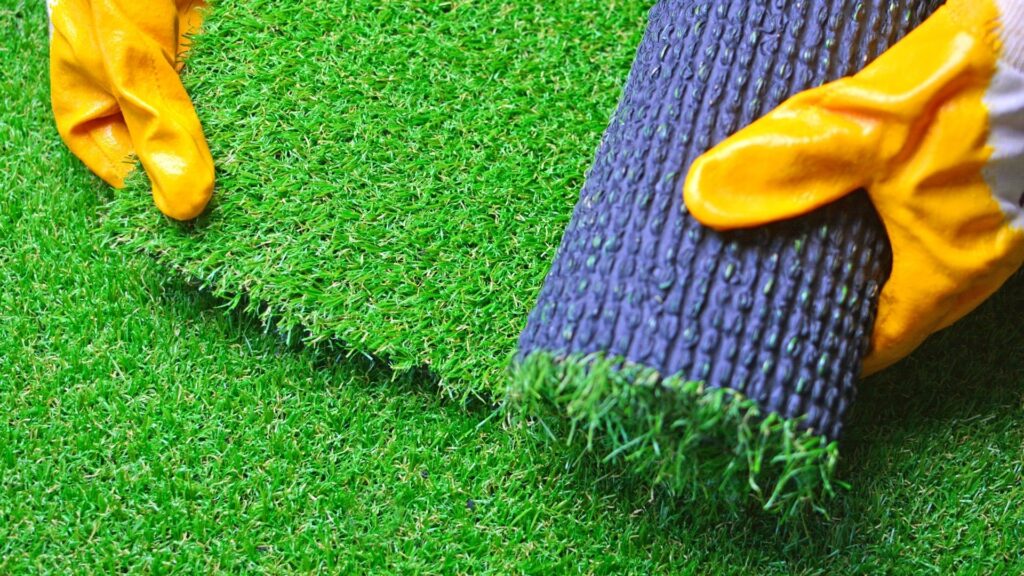
Synthetic grass which is also known as turf or astro turf does not need mowing, watering or fertilising like natural grass, but it is still exposed to everyday mess. Leaves can settle between the fibres, dust can build up in dry weather, pets can leave behind smells, and children can spill food or drinks while playing outside.
Regular cleaning helps protect the look and feel of the surface. It also stops bacteria, odours and debris from building up in the backing or infill. A small amount of maintenance can make a big difference, especially if your synthetic grass is used by pets, children or as part of a busy garden area.
What You Need To Clean Synthetic Grass
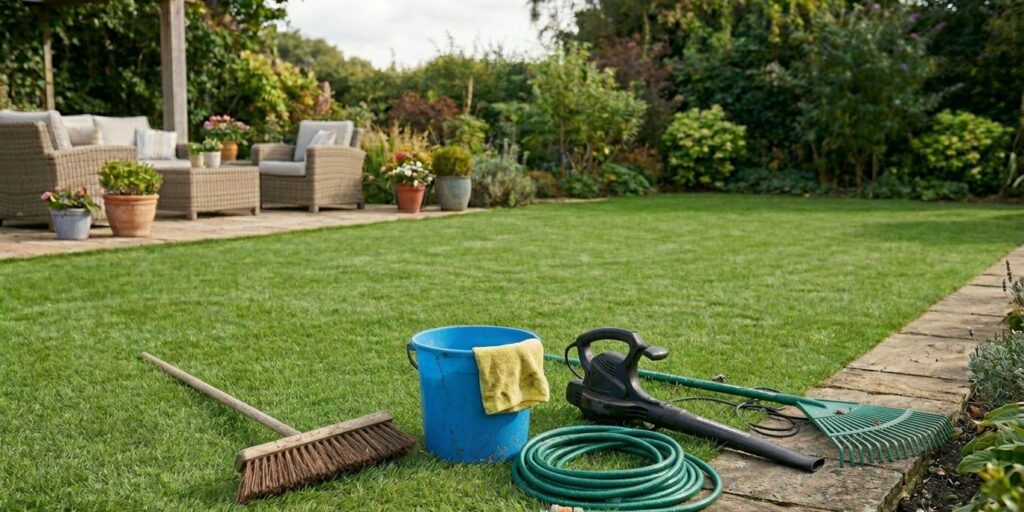
You do not need specialist equipment for basic cleaning. In most cases, the following tools are enough:
- A stiff outdoor broom
- A plastic rake
- A leaf blower
- A garden hose
- A bucket of warm water
- Mild washing-up liquid
- A soft brush or cloth
- White vinegar for light odours
- Enzyme cleaner for pet urine
- Pet-safe disinfectant for
- hygiene cleaning
Avoid metal rakes, wire brushes, harsh solvents, ammonia-based cleaners and strong bleach unless your grass manufacturer says they are safe. These can damage the fibres, affect the colour or leave smells that encourage pets to urinate in the same spot again.
How To Clean Synthetic Grass Step By Step
1. Remove Leaves, Twigs And Loose Debris
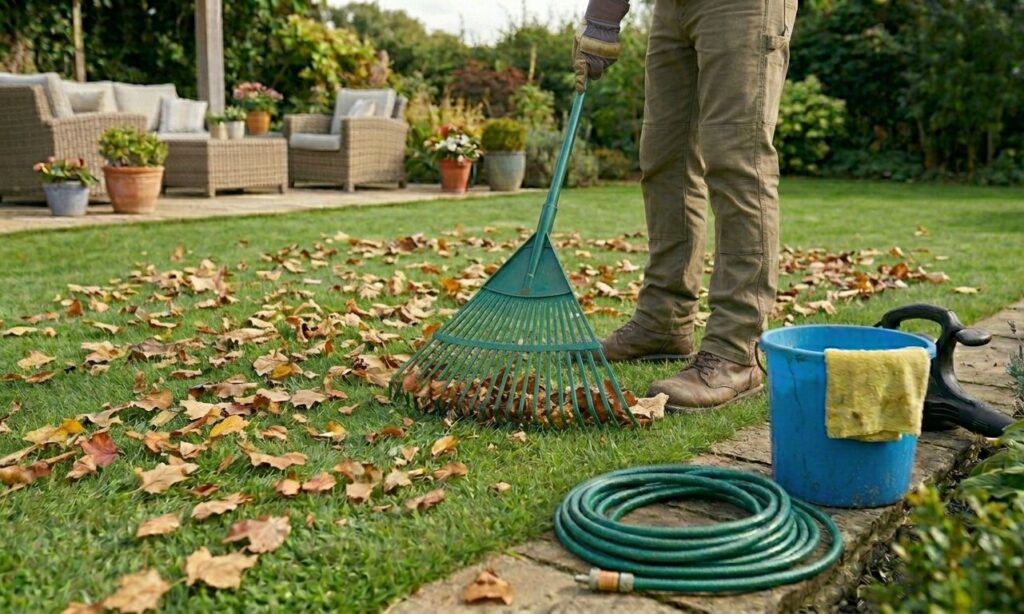
Start by clearing the surface. Use a plastic rake, leaf blower or stiff broom to remove leaves, twigs, soil and other loose debris. This prevents dirt from being pushed deeper into the grass when you rinse it.
For small areas, a broom is usually enough. For larger lawns, a leaf blower is quicker and helps clear debris without pulling at the grass fibres. Avoid using a metal rake because it can catch on the synthetic grass and damage the surface.
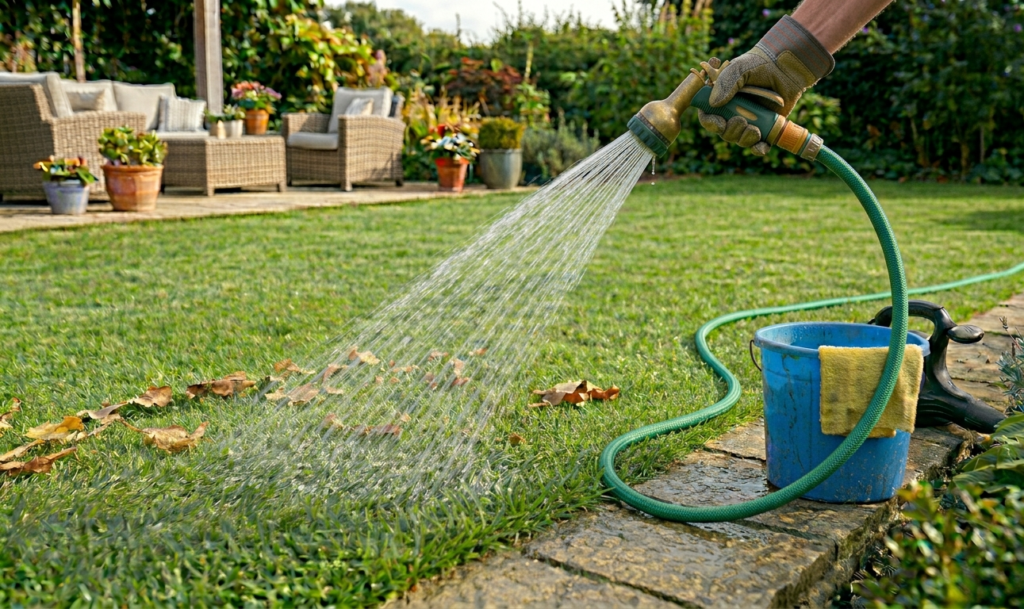
2. Rinse The Grass With A Hose
Once the debris has been removed, rinse the grass with clean water. A standard garden hose is ideal. This washes away dust, pollen, light dirt and any residue left on the fibres.
Use moderate water pressure rather than a harsh jet.
Astro turf is designed to drain, so the water should pass through the backing and into the base below. If your artificial grass is near a swimming pool, rinsing is especially useful because it helps remove chlorine residue before it builds up.
3. Spot-Clean Marks And Stains
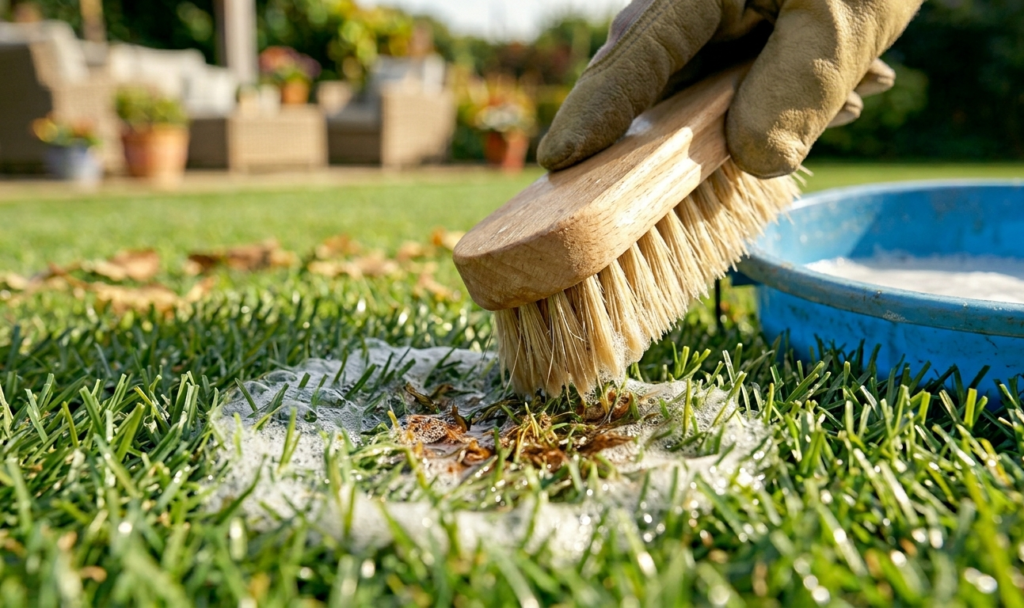
For everyday stains, mix warm water with a small amount of mild washing-up liquid. Apply it to the affected area with a soft cloth or soft-bristled brush, gently work it into the fibres, then rinse with clean water.
This method works well for most food spills, soft drinks, mud and light marks. The sooner you clean a spill, the easier it is to remove. If something has dried onto the grass, loosen it gently first rather than scraping aggressively.
4. Treat Pet Urine And Odours
If pets use your synthetic grass, rinsing is important. Dog urine can leave odours if it is allowed to sit in the grass or drain into the base repeatedly. For best results, rinse pet areas soon after use, especially in warm weather.
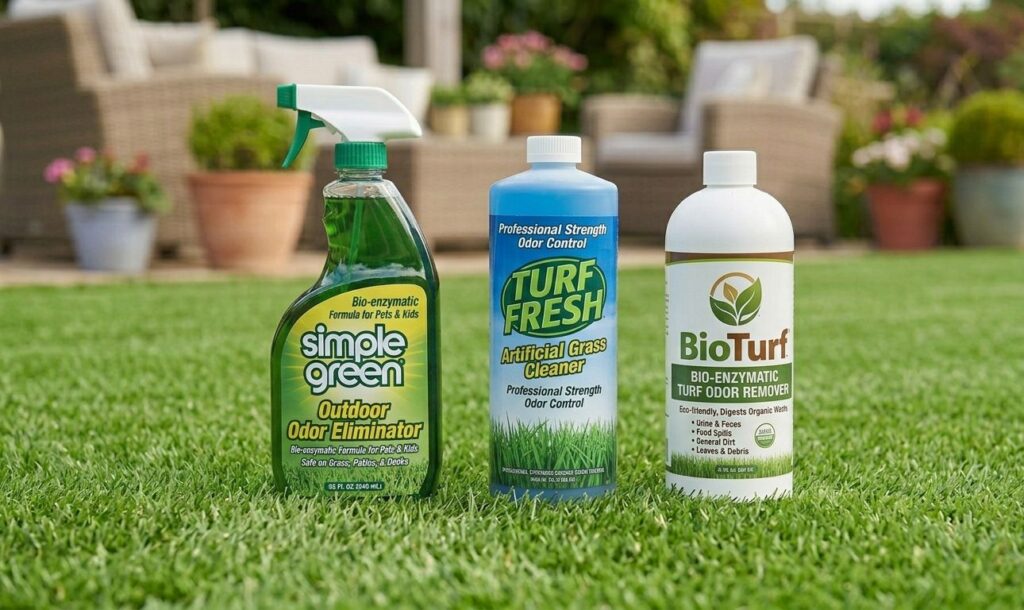
For stronger smells, use an artificial grass enzyme cleaner. Enzyme cleaners break down the compounds in urine that cause odour, rather than just covering the smell. Spray the cleaner onto the affected area, allow it to sit for the time recommended on the label, then rinse thoroughly.
White vinegar diluted with water can help with light odours, but it is not always enough for repeated dog urine smells. For regular pet use, an enzyme cleaner is usually the better option.
5. Remove Pet Mess Safely
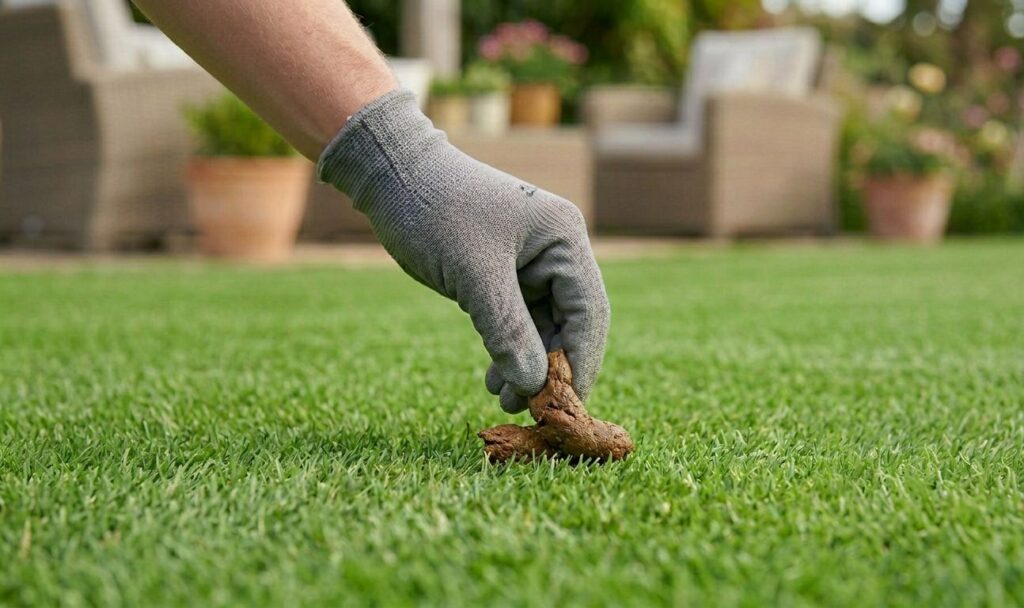
Pick up solid pet waste as soon as possible. If there is any residue left behind, clean the area with warm soapy water, rinse it well, then use a pet-safe disinfectant or enzyme cleaner if needed.
Do not use ammonia-based cleaners on pet areas. Ammonia can smell similar to urine, which may encourage dogs to keep using the same spot.
6. Brush The Fibres Upright
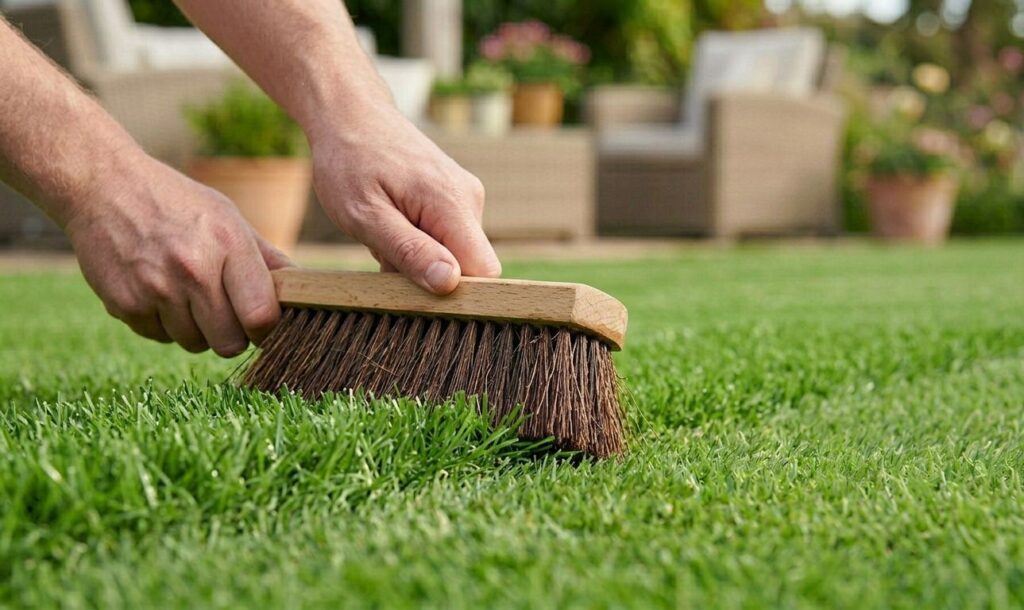
After cleaning, brush the grass against the direction of the pile with a stiff broom or artificial grass brush. This lifts flattened fibres and helps the lawn look fuller.
Brushing is especially useful in high-traffic areas, under garden furniture, around play areas and where pets often lie down. If your synthetic grass has longer fibres, brushing may be needed more often to stop the pile from looking flat.
How Often Should You Clean Synthetic Grass?
How often you clean synthetic grass depends on how the area is used. A decorative front garden will need less cleaning than a back garden used by children and pets.
| Usage Level | Cleaning Frequency | Key Tasks |
| Light Use (e.g., decorative front gardens) | Once or twice a month | Rinse with water and remove debris as needed. |
| Heavy Use (e.g., gardens with kids and pets) | Weekly | Regular rinsing and debris clearing to prevent buildup. |
| Pet Areas (Specifically for dogs) | Regularly / As needed | Rinse toilet areas frequently; apply enzyme cleaner when odors appear. |
| Deep Clean (All households) | Once or twice a year | Thorough rinse, stain removal, odor treatment, and brushing fibers upright. |
How To Deep Clean Synthetic Grass
A deep clean is useful when your artificial grass starts to look dull, smell unpleasant or feel compacted. It is also worth doing after winter, after heavy garden use or before summer when the garden is used more often.
Start by removing all surface debris. Rinse the grass thoroughly with a hose, then clean stained or smelly areas with warm soapy water, diluted white vinegar or an enzyme cleaner, depending on the problem. Once the surface is clean and rinsed, brush the pile upright.
For larger lawns or heavily used areas, you can use a mechanical artificial grass brush or power broom. These tools help lift the fibres, redistribute infill and restore the surface. They are especially useful for sports turf, commercial spaces or lawns with visible traffic patterns.
How To Keep Synthetic Grass Looking New
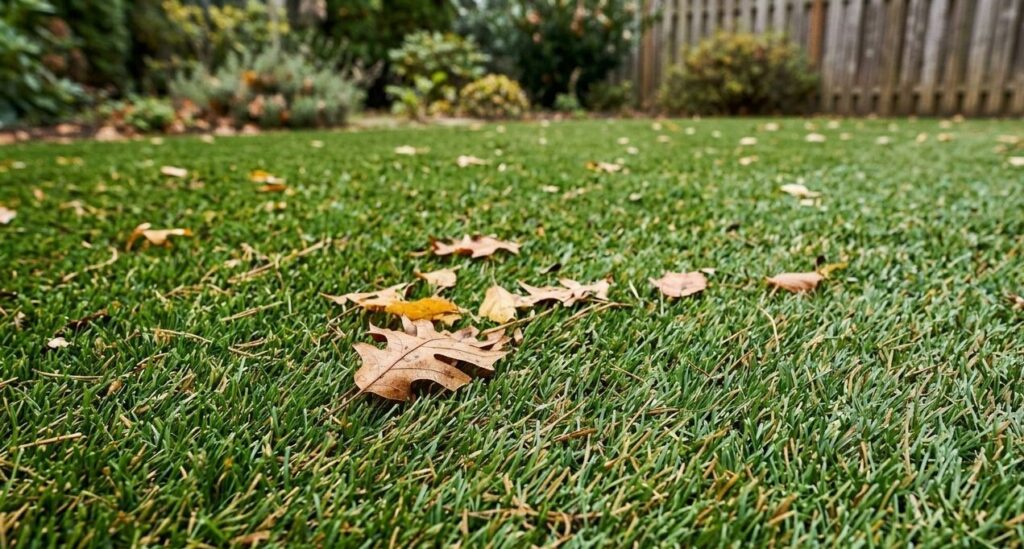
The best way to keep synthetic grass looking new is to clean a little and often. Remove leaves before they break down, rinse dust away during dry weather, clean spills quickly and brush flattened areas before they become heavily matted.
If furniture sits on the grass, move it occasionally to prevent permanent flattening. If pets use the lawn, rinse their favourite areas often and use an enzyme cleaner when needed. If the grass starts to look flat, brush against the pile to restore volume.
Pile height also affects maintenance. Shorter grass, around 20 to 25mm, is often easier to clean because dirt is less likely to get trapped. Medium pile heights, around 30 to 40mm, offer a good balance between comfort and easy maintenance.
Longer grass, around 50mm, can look softer and more realistic but may need more regular brushing.
How To Remove Common Stains From Synthetic Grass
Let mud dry before removing it. Once dry, brush or rake away the loose dirt, then rinse the area with a hose. If marks remain, use warm soapy water and a soft brush.
Clean food or drink spills quickly with warm water and mild washing-up liquid. Rinse well afterwards so no sticky residue is left behind.
Remove solids first, then clean the area with warm soapy water. Rinse thoroughly. For hygiene, use a pet-safe or turf-safe disinfectant if needed.
Harden the gum with ice, then gently lift it away. Avoid pulling too hard because this can damage the fibres. Do not use harsh solvents unless the manufacturer confirms they are safe.
Moss and algae can appear in shaded or damp areas. Brush away loose growth, then use a moss and algae treatment that is marked safe for artificial grass. Avoid products designed only for natural lawns, as they may be too harsh for synthetic turf.
Rinse the area with water as soon as possible. For lingering smells, use an artificial grass enzyme cleaner. If the smell keeps returning, the urine may have soaked into the base layer, so repeated treatment may be needed.
FAQs
Can You Use Vinegar On Synthetic Grass?
Yes, diluted white vinegar can be used on synthetic grass for light cleaning and mild odours. Mix equal parts white vinegar and water, apply it to the affected area, leave it for a few minutes, then rinse thoroughly.
Vinegar is useful for general freshness, but it is not always strong enough for deep pet urine odours. For dog urine, an enzyme cleaner is usually more effective.
Can You Use Bleach On Synthetic Grass?
It is best to avoid bleach unless your artificial grass manufacturer says it is safe. Strong bleach can damage the fibres, affect the colour and harm pets or children if not rinsed properly.
For disinfecting synthetic grass, use a pet-safe, child-safe disinfectant that is suitable for artificial turf. Always rinse the area afterwards and let it dry before pets or children use it again.
Can You Pressure Wash Synthetic Grass?
You can lightly pressure wash some synthetic grass, but it must be done carefully. Too much pressure can disturb the infill, loosen joins or damage the backing.
A garden hose is safer for regular cleaning. If you use a pressure washer, keep it on a low setting, hold the nozzle away from the grass and avoid spraying directly at seams or edges.
What is the best way to clean synthetic grass?
The best way to clean synthetic grass is to remove loose debris, rinse with a garden hose, spot-clean stains with warm soapy water, use an enzyme cleaner for pet urine and brush the fibres upright. This keeps the grass clean, fresh and looking natural.
How often should synthetic grass be cleaned?
Synthetic grass should usually be rinsed every one to two weeks, depending on use. Pet areas may need rinsing more often, while a full deep clean is usually needed once or twice a year
How do you clean synthetic grass that smells of dog urine?
Rinse the area thoroughly with water, then apply an artificial grass enzyme cleaner. Let it sit for the time stated on the product label, then rinse again. Enzyme cleaners are best because they break down the urine compounds that cause odour.
Can I use washing-up liquid on synthetic grass?
Yes, mild washing-up liquid mixed with warm water is safe for most synthetic grass. It is useful for cleaning food spills, light stains and general dirt. Always rinse the area afterwards.
Can I vacuum synthetic grass?
You can vacuum small artificial grass areas, such as balconies or terraces, if the vacuum is suitable for outdoor use. However, avoid using a strong vacuum on infilled turf because it may remove the infill. A broom, rake or leaf blower is usually safer.
What should you not use on synthetic grass?
Avoid metal rakes, wire brushes, harsh solvents, ammonia-based cleaners and strong bleach. These can damage the fibres, affect the colour or make pet odours worse.
Does rain clean synthetic grass?
Rain can help rinse dust and light dirt from synthetic grass, but it should not replace proper cleaning. You still need to remove debris, clean stains, treat pet odours and brush the fibres when needed.
© How To Clean Wiki | 2026 Created with ❤️