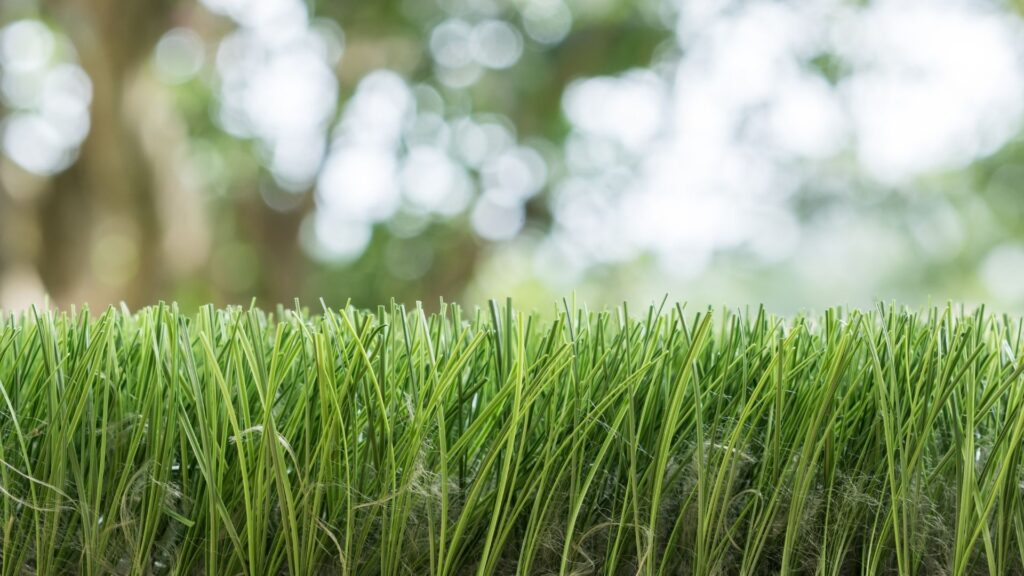
Artificial turf is designed to be low maintenance, but that doesn’t mean maintenance-free.
Over time, synthetic grass collects dust, bacteria, pet waste, pollen and organic debris that can flatten the fibres, reduce drainage and create stubborn odours beneath the surface.
Most homeowners only realise there’s a problem once the turf starts smelling in warm weather or losing its natural appearance in high-traffic areas.
The good news is that properly maintained artificial turf can stay clean, upright and realistic-looking for well over a decade.
The key is understanding how to clean the turf system correctly — not just the visible fibres on top.
Quick Summary: How To Clean Artificial Turf Properly
| Task | Best Method | Frequency |
|---|---|---|
| Remove debris | Leaf blower or stiff broom | Weekly |
| Prevent matting | Multi-directional cross-brushing | Monthly |
| Pet odor removal | Enzymatic cleaner + rinse | As needed |
| Deep cleaning | Power broom + antimicrobial treatment | Every 3–6 months |
| Weed prevention | Hand removal + turf-safe treatment | Seasonal |
| Drainage maintenance | Check permeability & infill compaction | Quarterly |
Why Artificial Turf Gets Dirty Fast
Most homeowners assume artificial turf stays clean because it doesn’t grow like natural grass. In reality, synthetic grass collects contamination much faster than people expect because nothing is naturally breaking waste down underneath the surface.
Everything stays trapped inside the turf system itself:
- dust.
- pollen.
- bacteria.
- skin oils.
- food spills.
- pet urine.
- mould spores.
- organic debris.
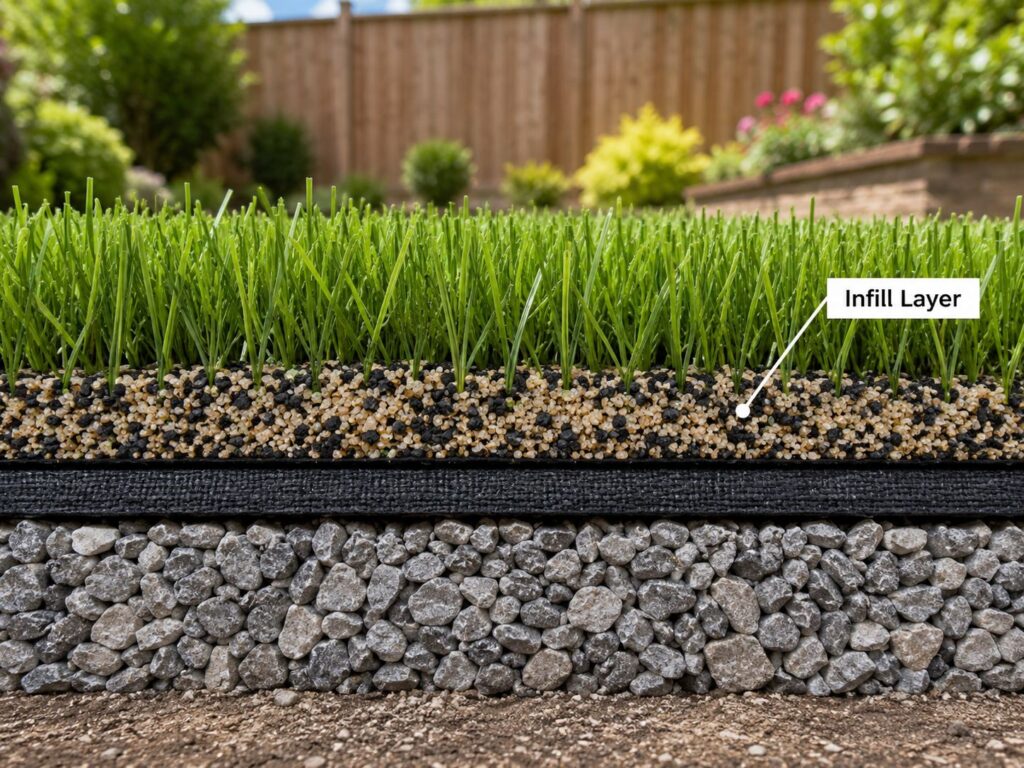
A lot of this material settles beneath the visible fibres inside the infill layer, where airflow is lower and moisture stays trapped longer. That’s why artificial turf can still smell bad even when it looks perfectly clean on the surface.
One of the biggest misconceptions online is that pet odours come from “dirty grass.”
They don’t.
The real issue is what happens underneath the turf after urine enters the system. Dog urine contains urea. Once bacteria inside the turf begin breaking that urea down, ammonia gas starts forming beneath the fibres.
Heat accelerates this dramatically.
That’s why artificial turf often smells fine in the morning but suddenly becomes overpowering during hot afternoons.
Most homeowners respond by flooding the area with water. Ironically, that usually makes the problem worse. Excess water pushes urine deeper into the infill while feeding bacterial growth underneath the surface. That’s why heavily rinsed pet turf can still smell terrible days later.
The Hidden Problem Most Homeowners Never Notice
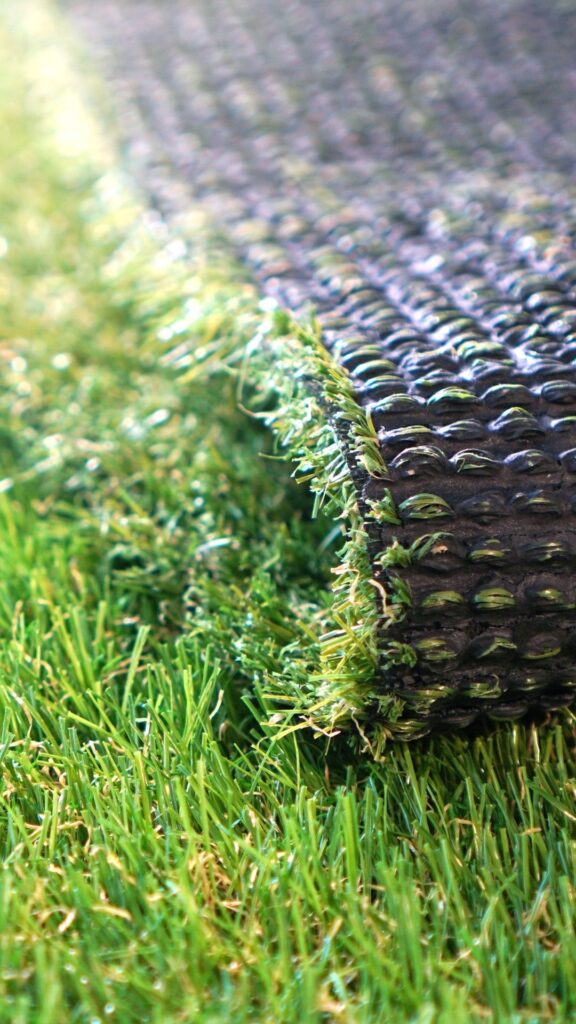
The fibres themselves usually aren’t the issue. In most cases, the real problem is the infill underneath the astro turf. Over time, infill becomes compacted, moisture-heavy and contaminated with organic residue, which reduces airflow throughout the turf system. As permeability drops, drainage slows, bacteria stay trapped longer and the fibres lose the support that keeps them upright. That’s why older artificial turf often starts looking shiny, hard, matted and uneven even when the fibres themselves aren’t actually damaged.
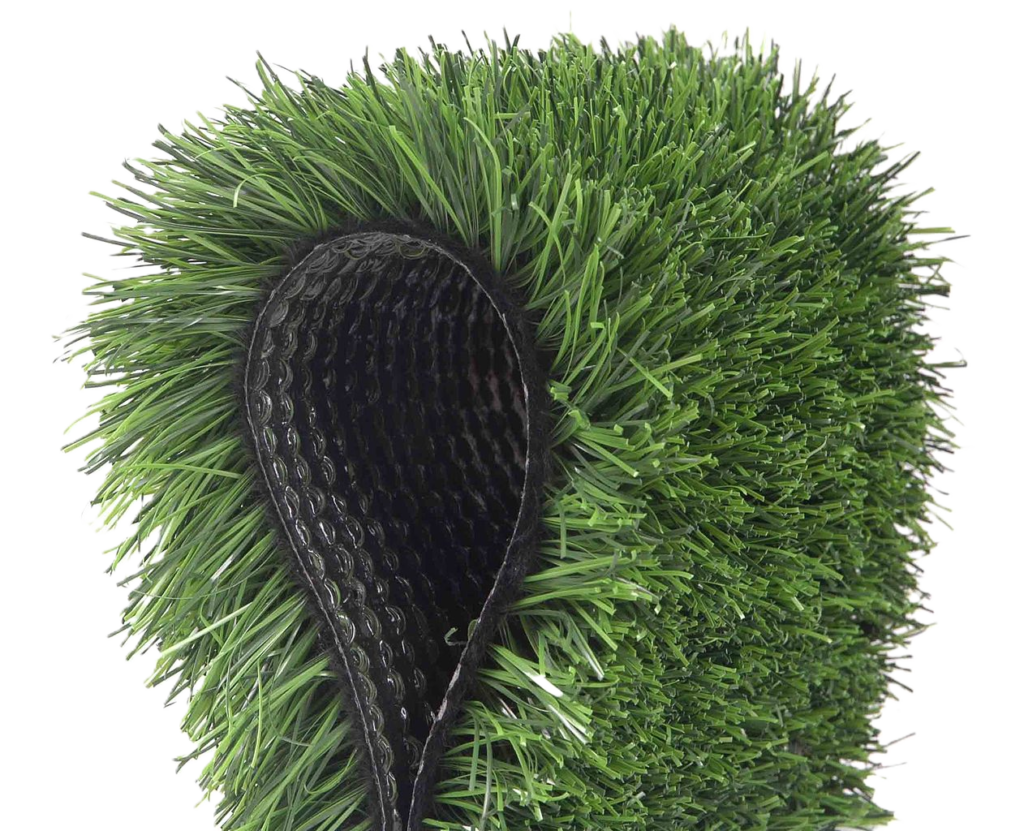
- Compacted infill reduces permeability and airflow
- Trapped moisture increases bacterial growth and odors
- Poor drainage causes turf to stay damp longer
- Unsupported fibres begin flattening in high-traffic areas
- Most “worn out” turf actually needs infill restoration, not replacement
Common Artificial Turf Cleaning Mistakes
Most artificial turf problems don’t happen overnight. They build slowly through incorrect maintenance habits that trap bacteria, flatten fibres and reduce drainage over time. A lot of homeowners unintentionally make these issues worse by using the wrong cleaning methods.
| Problem | The Wrong Fix | The Proper Way |
|---|---|---|
| Pet odor | Flooding with water | Enzymatic cleaners + extraction |
| Flattened turf | Brushing one direction | Multi-directional cross-brushing |
| Stains | Bleach or solvents | Mild soap + plastic scraper |
| Moss growth | Ignoring moisture | Improve airflow + antimicrobial treatment |
| Weeds | Metal tools | Hand-pulling + turf-safe herbicide |
| Drainage issues | More rinsing | Restore permeability + infill leveling |
The Correct Way To Clean Artificial Turf
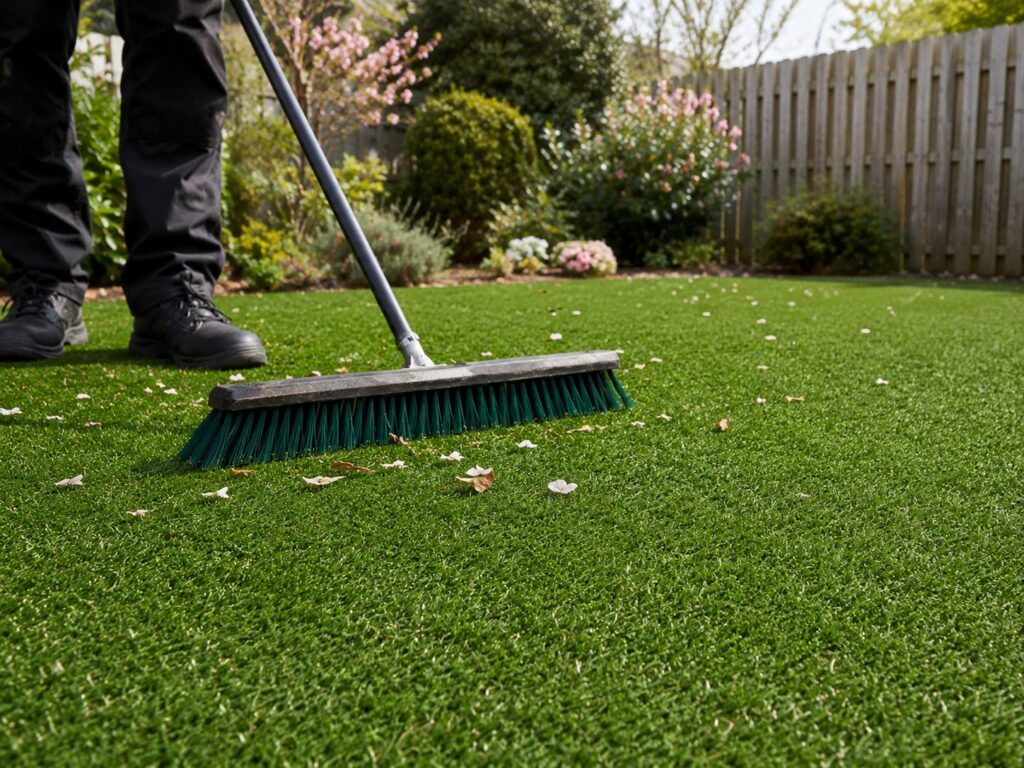
The best artificial turf maintenance routines are layered. Weekly upkeep keeps the surface clean, but long-term performance depends on how well the entire turf system is maintained underneath the fibres. Proper cleaning helps prevent odors, restores airflow, improves permeability and keeps the grass looking upright and realistic instead of flat and worn out.
Most professionals break artificial turf cleaning into four key stages:
- removing debris
- restoring the fibres
- controlling bacteria and odors
- maintaining the infill layer
Skipping one of these eventually affects the others.
Step 1: Remove Organic Debris
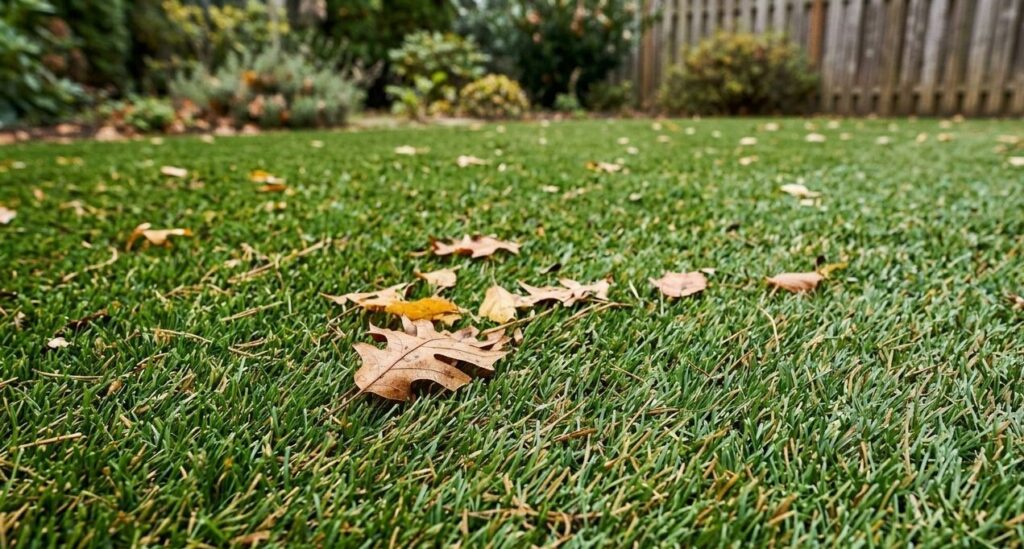
Leaves, twigs and organic debris do more than make artificial grass look messy. As debris breaks down, it traps moisture underneath the fibres and creates the perfect environment for bacteria, moss, mildew and weed growth.
Use:
- a leaf blower
- stiff-bristle broom
- plastic rake
- turf brush
Avoid:
- metal rakes
- steel brushes
- sharp gardening tools
Metal tools can damage fibres surprisingly quickly and weaken the turf backing over time. For best results, remove debris weekly before it settles deep into the turf pile and infill layer.
Step 2: Cross-Brush The Turf
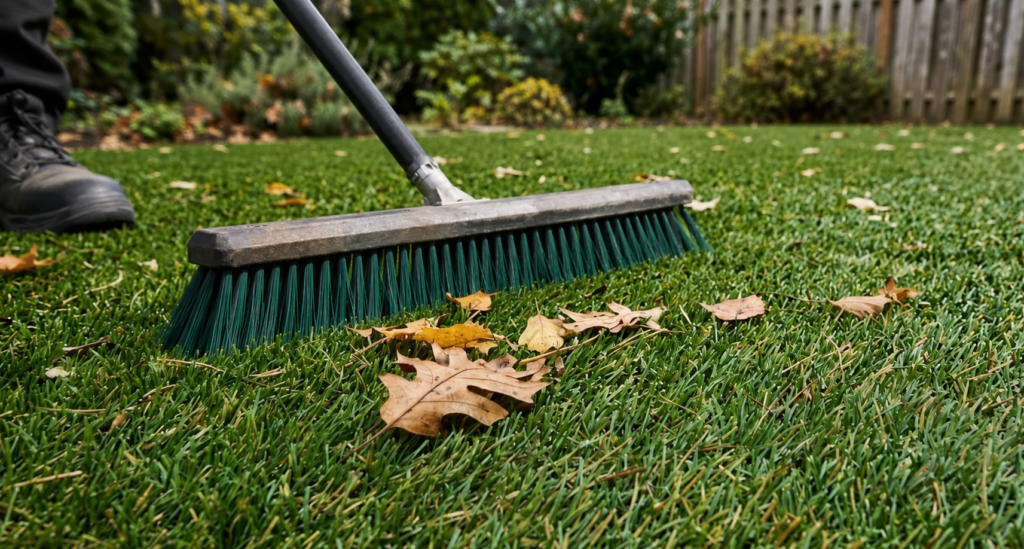
Flattened astro turf usually isn’t worn out. It’s unsupported.
As foot traffic compresses the infill underneath the fibres, the blades lose structural support and begin laying flat. Cross-brushing lifts the fibres upright again while redistributing the infill evenly across the surface.
Professional turf groomers rarely brush in one direction only. Instead, they use multi-directional “cross-brushing” to keep the turf looking more natural and prevent permanent fibre lean.
Cross-brushing helps:
- restore upright fibres
improve airflow - reduce infill compaction
- improve drainage performance
- make turf look greener and fuller
For residential lawns, a stiff synthetic broom usually works well. Larger installations often require a power broom or mechanical turf groomer.
Step 3: Rinse The Turf Properly
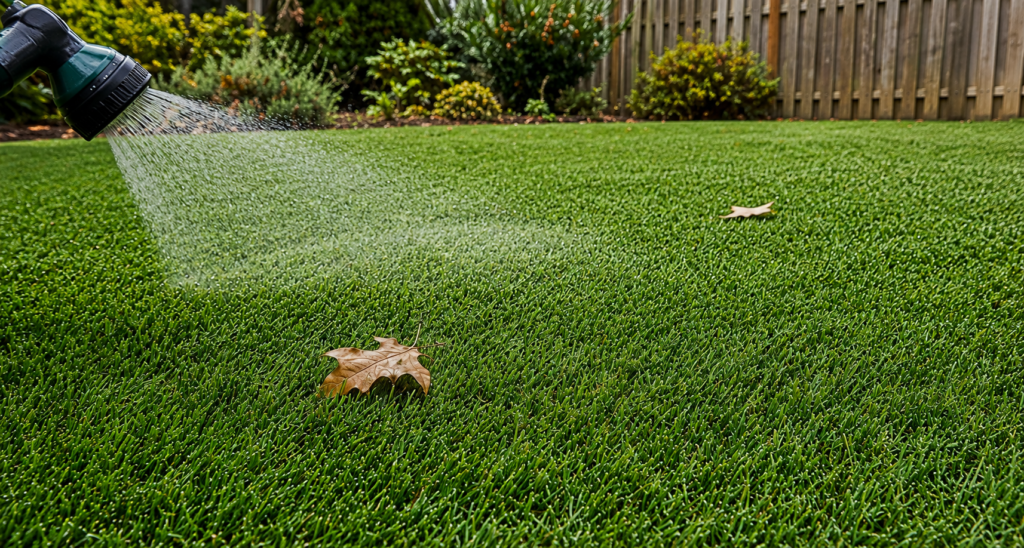
A light rinse removes:
- dust
- pollen
- loose bacteria
- surface dirt
But excessive rinsing can actually create new problems.
Flooding the turf repeatedly pushes moisture and contaminants deeper into the infill, especially in pet-heavy areas where urine buildup already exists underneath the surface.
Instead:
- rinse affected zones directly
- use moderate water pressure
- allow airflow afterwards
- avoid soaking the turf daily
If water pools for longer than 24 hours, the issue is usually reduced permeability caused by compacted infill or blocked drainage underneath the turf system.
Step 4: Control Pet Odors Correctly
This is where most online advice falls apart.
Vinegar may temporarily reduce smells, but it usually doesn’t eliminate the bacteria and ammonia-causing compounds trapped inside the infill layer.
That’s why odors often return quickly.
Enzymatic cleaners work far better because they break down:
- urea
- bacteria
- organic proteins
- ammonia-producing residue
Modern turf-safe bio-detergents are designed specifically for synthetic grass and clean much deeper without damaging the fibres or backing.
For heavy pet use areas, professional extraction cleaning may eventually be needed to remove contamination trapped deep inside the infill system. Or you coud just replace that specific part that has been ruined by the pet odors.
Step 5: Restore The Infill Layer
The infill underneath artificial turf plays a huge role in:
- cushioning
- airflow
- drainage
- fibre support
- odor control
Over time, infill becomes compacted and uneven, especially in walkways, pet areas and high-traffic zones.
When this happens:
- fibres flatten
- permeability drops
- drainage slows
- turf feels harder
- underfoot bacteria remain trapped longer
Deep brushing and infill redistribution restore airflow and help the turf perform properly again.
High-end pet turf systems increasingly use zeolite infill because it naturally absorbs ammonia and helps control long-term odor buildup more effectively than standard silica sand.
“Low Maintenance” Artificial Turf Is a Myth
Artificial turf is absolutely lower maintenance than natural grass.
But “low maintenance” and “maintenance-free” are not the same thing. A lot of homeowners assume synthetic turf can simply be installed and ignored for years without consequences. The problem is that most long-term turf issues happen gradually underneath the surface, where infill compaction, trapped bacteria and poor airflow slowly reduce the turf’s performance over time.
That’s why neglected artificial turf often starts looking:
- shiny
- flat
- uneven
- hard underfoot
- permanently matted
even when the fibres themselves aren’t technically damaged.
In many cases, the turf doesn’t actually need replacing. It simply needs:
- deep grooming
- infill restoration
- permeability
- improvement
- odor treatment
- fibre lifting
The best-looking artificial lawns are almost always the ones maintained consistently, not necessarily the ones that cost the most to install.
DIY vs Professional Artificial Turf Cleaning
Regular artificial turf maintenance can absolutely be handled at home, especially when it comes to brushing, debris removal and light rinsing. But deeper issues like ammonia buildup, compacted infill and reduced permeability usually require more advanced equipment and restoration methods.
That’s why professional turf cleaning has become far more specialised in recent years, particularly for pet turf, sports installations and high-traffic commercial areas.
| DIY Cleaning | Professional Cleaning |
|---|---|
| Removes surface debris | Extracts deep contamination |
| Good for weekly upkeep | Restores compacted infill |
| Handles light odors | Neutralizes embedded ammonia |
| Uses household tools | Uses power groomers & extraction systems |
| Lower short-term cost | Better long-term turf preservation |
| Suitable for light maintenance | Ideal for heavy pet use and drainage issues |
Seasonal Artificial Turf Maintenance
Artificial turf behaves differently throughout the year depending on temperature, moisture levels and organic debris buildup. Adjusting your maintenance routine seasonally helps prevent long-term issues like infill compaction, moss growth and ammonia odors before they become difficult to remove.
Spring
Spring is the best time for a full turf reset after winter moisture and debris buildup.
Focus on:
- deep brushing
- infill redistribution
- moss treatment
- seam inspections
- restoring permeability
This is also the ideal time to apply antimicrobial turf treatments in pet-heavy areas before summer heat intensifies bacterial activity.
Summer
Heat dramatically increases:
- bacterial growth
- ammonia release
- turf surface temperatures
- odor intensity
This is why artificial turf often smells strongest during hot afternoons.
Instead of flooding the turf repeatedly with water, use targeted rinsing and allow proper airflow afterwards.
One overlooked professional trick is evening rinsing rather than midday watering. Cooler turf dries more evenly overnight and traps less heat-driven ammonia beneath the fibres.
High-traffic areas may also need more frequent cross-brushing during summer because infill compacts faster in dry conditions.
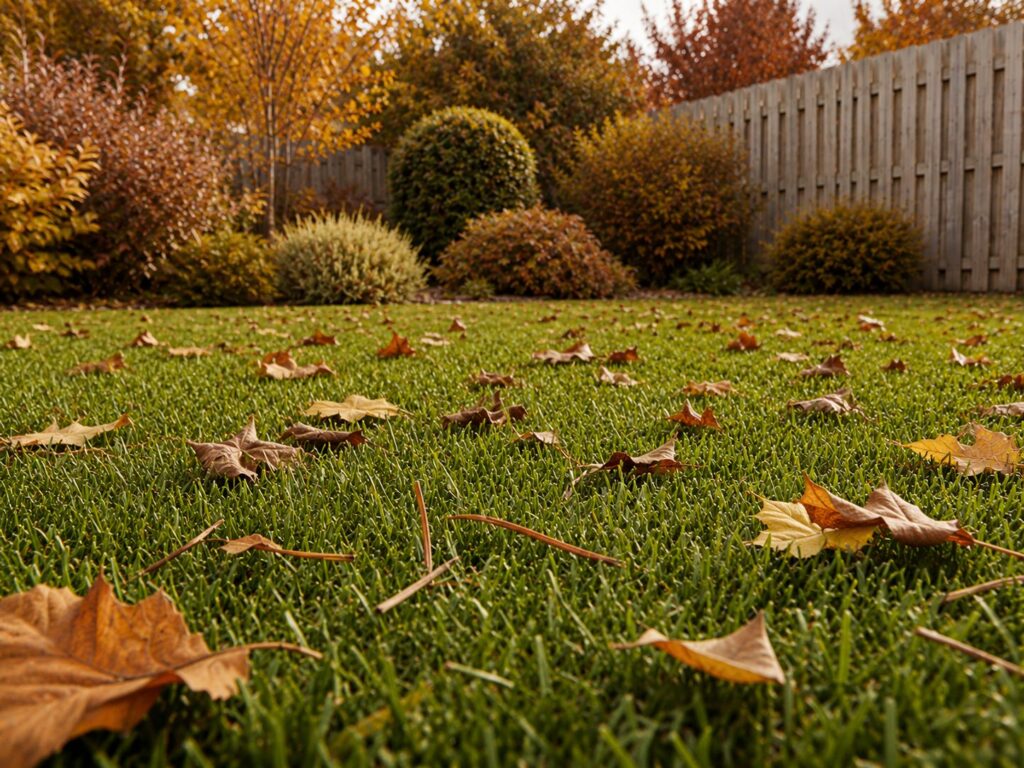
Autumn
Fallen leaves and organic debris break down quickly once trapped inside the turf pile.
If left too long, they:
- trap moisture
- reduce airflow
- encourage moss growth
- feed bacteria beneath the surface
Weekly debris removal becomes especially important during autumn, particularly around edges, seams and shaded areas where organic material accumulates fastest.
Winter
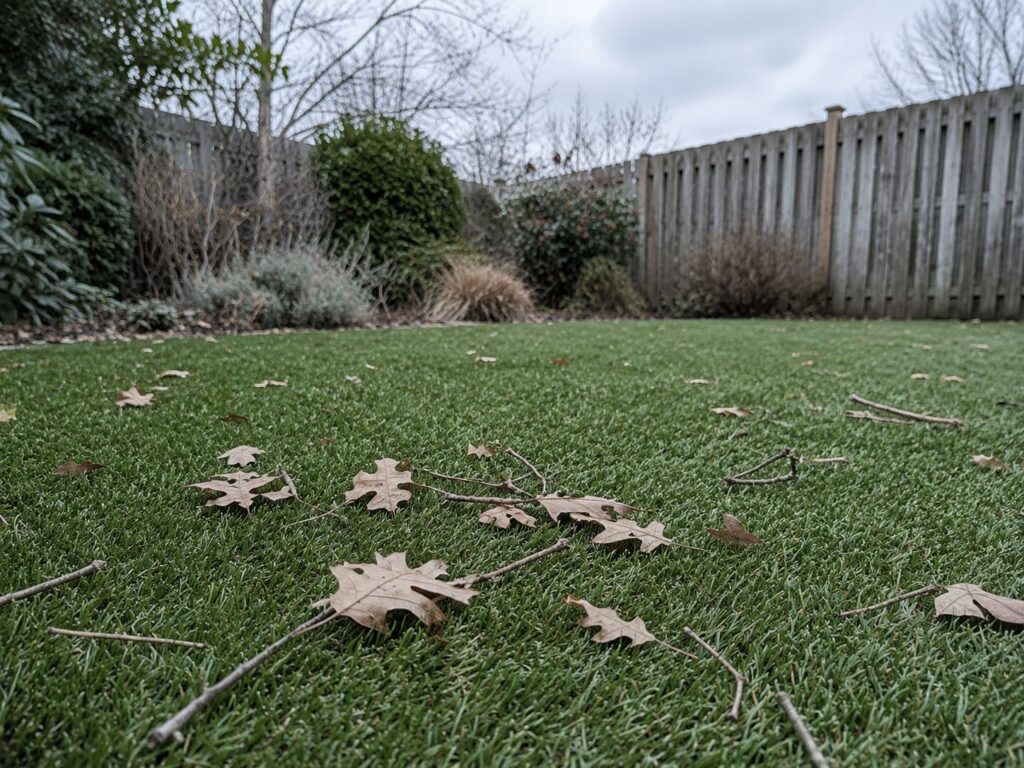
Artificial turf requires less maintenance during winter, but moisture management becomes far more important.
Avoid:
- metal snow shovels
- steel rakes
- salt-based ice melt products
These can damage fibres and weaken the backing system over time.
If snow builds up heavily, allow it to melt naturally whenever possible. Once dry, lightly cross-brush the turf to lift compressed fibres back upright.
Winter is also a good time to inspect drainage performance because pooling water becomes easier to spot during wetter conditions.
FAQs
Can you use a pressure washer on artificial grass?
Yes, you can use a pressure washer on artificial grass, but only on a low-pressure setting with a wide-angle spray nozzle. High pressure can dislodge the infill, weaken seams, flatten fibres and damage the turf backing. For most residential lawns, a garden hose is safer for regular rinsing.
What causes artificial turf to smell?
Artificial turf usually smells because pet urine, bacteria and organic residue become trapped inside the infill layer. When dog urine breaks down, bacteria convert urea into ammonia gas. Heat and moisture make this smell stronger, especially during summer.
Does vinegar remove pet odor from artificial grass?
Vinegar can temporarily reduce pet odor on artificial grass, but it does not always remove the source of the smell. Enzymatic cleaners are usually more effective because they break down urine residue, bacteria and ammonia-causing organic compounds inside the turf system.
How often should artificial turf be brushed?
Artificial turf should usually be brushed once a month to keep the fibres upright and prevent matting. High-traffic areas, pet areas and commercial turf may need weekly brushing. Multi-directional cross-brushing works best because it lifts the fibres and redistributes infill evenly.
What is the best infill for pet turf?
Zeolite infill is one of the best options for pet turf because it helps absorb ammonia and reduce urine odors. It also supports drainage, airflow and long-term odor control better than standard silica sand in pet-heavy areas.
© How To Clean Wiki | 2026 Created with ❤️