The Definitive Guide to Astroturf Maintenance
The myth that artificial turf is “maintenance-free” often leads to the premature degradation of a significant property investment.
While synthetic grass does not require mowing or fertilization, it is a sophisticated system of polyethylene fibers and mineral infill that requires a structured hygiene protocol to maintain its aesthetic and functional integrity.
Without intervention, organic debris decomposes into the backing, blocking drainage and creating a breeding ground for bacteria. This guide outlines the essential maintenance cadences, technical remediation for pet owners, and advanced troubleshooting for common turf challenges.
The Three Pillars of Routine Maintenance
Effective care is divided into three primary activities: debris management, fluid rinsing, and fiber grooming.
- Debris Management (Weekly)
Organic matter, such as leaves, twigs, and pollen, must be removed before it breaks down and migrates into the infill. Decomposing organic material can attract mold, impede drainage, and lead to unpleasant odors.
Tools: Use a leaf blower on a low setting or a plastic/synthetic-bristled rake.
Warning: Never use metal-tined rakes or wire brushes. These can tear the synthetic fibers and permanently damage the turf backing. - The Power of the Rinse (Bi-Weekly)
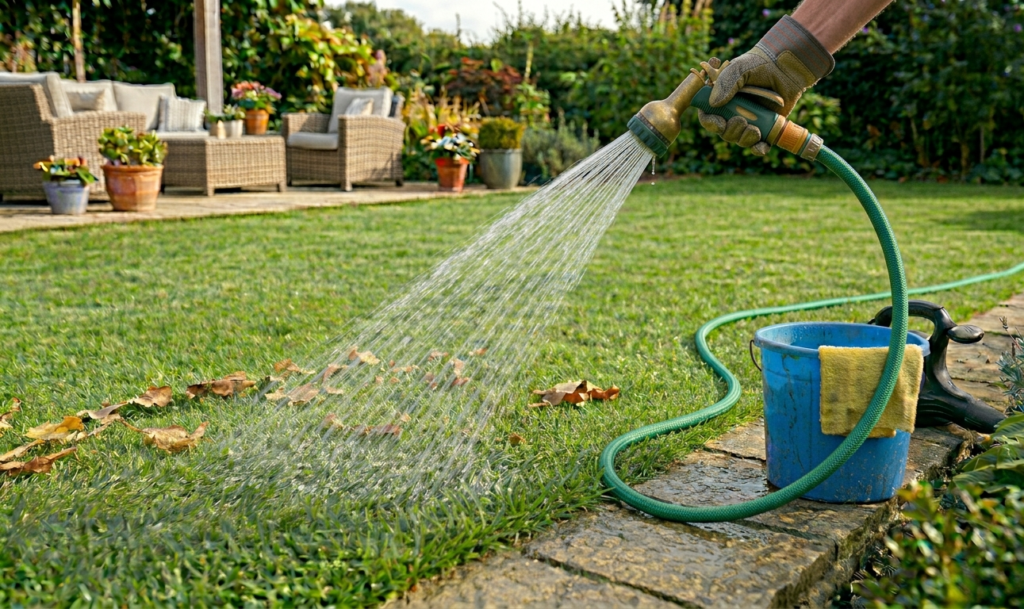
Rainwater is a natural ally, but in dry climates or during drought, a manual rinse is required to flush away dust, dander, and airborne pollutants.
Technique: Use a garden hose with a spray nozzle at medium pressure.
Temperature Control: On hot days, a quick rinse provides evaporative cooling, protecting the fibers from heat-softening and making the surface safer for children and pets. - Fiber Restoration and Cross-Brushing (Monthly)
High-traffic zones inevitably suffer from “matting,” where the blades flatten. Brushing restores the turf’s “memory” and ensures the infill remains evenly distributed.
Technique: Use a stiff-bristled push broom to sweep against the grain (the opposite direction of the blade lean) to coax the fibers into an upright position.
For pet owners: Remediation vs. Masking
For households with pets, maintenance moves from aesthetic care to biological remediation. Pet urine contains uric acid, which forms resilient salt crystals that trap odors deep within the turf base.
| Problem | Recommended Action | Scientific Basis |
| Solid Waste | Pick up immediately after it dries. | Drying prevents smearing into the fibers and infill. |
| Urine (Odor) | saturate with Enzyme Cleaner (e.g., BioS+, TurFresh). | Enzymes digest the uric acid crystals at a molecular level. |
| Light Sanitization | 50/50 White Vinegar and Water solution. | Acetic acid neutralizes ammonia but does not eliminate all bacterial odors. |
| Bacterial Risk | Antimicrobial Infill (Envirofill, ZeoFill). | Inhibits the growth of bacteria, mold, and mildew within the system. |
Critical Note: Avoid using bleach or ammonia-based cleaners. These chemicals can damage the UV-protective coating on the fibers and may actually encourage pets to re-mark the area.
Targeted Stain Removal and Troubleshooting
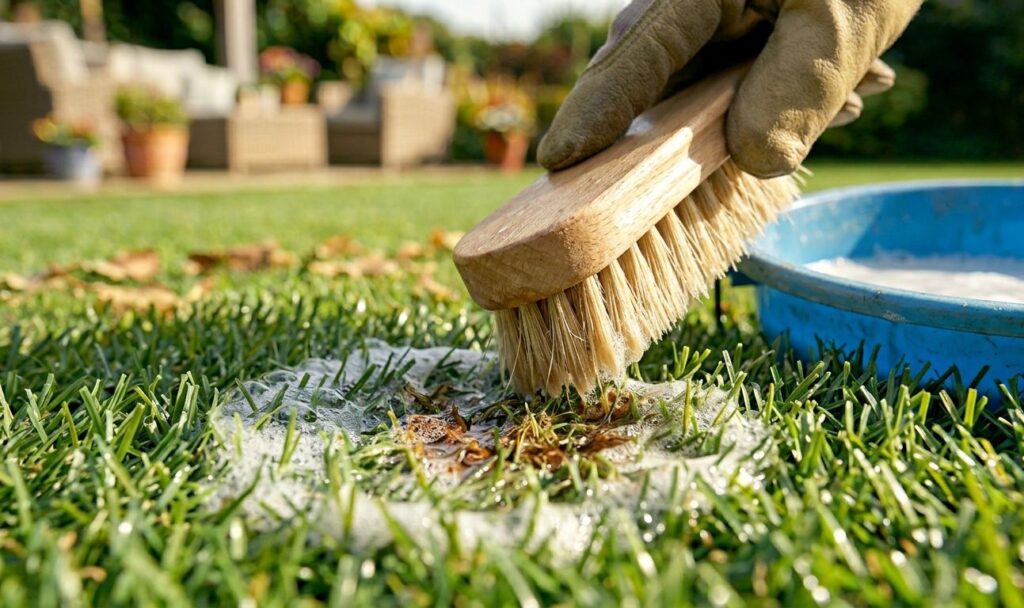
Artificial turf is inherently stain-resistant, but specific contaminants require specialized handling:
- Sticky Substances (Gum/Tree Sap): Apply ice cubes or an aerosol refrigerant to harden the substance. Once brittle, carefully scrape it away with a plastic putty knife.
- Oil, Grease, and Ink: Act quickly by blotting with a clean rag. Use a small amount of mineral spirits on a cloth to dab the spot, then rinse thoroughly with water.
- Food and Wine Spills: Blot the excess liquid. Scrub gently with a mixture of warm water and mild dish detergent (one teaspoon per pint), then rinse.
- Weeds: Pull surface weeds by hand. For persistent growth, use a water-based weed killer twice a year.
Common Mistakes to Avoid
- Improper Power Washing: While a pressure washer can be used, it must stay under 1500 PSI and the nozzle must remain at least 12 inches away at a wide angle. Excessive pressure can dislodge infill and tear the backing.
- Heat Exposure: BBQs, fire pits, and even focused sunlight reflected from high-efficiency windows can melt synthetic fibers.
- Vacuuming with Beater Bars: Standard household vacuums with rotating brushes can pull on turf fibers. Only use vacuums specifically designed for artificial lawns.
Advanced Performance: Infill and Drainage
The “engine” of your turf is the drainage and infill system. If you notice a “wet dog smell” after rain or standing water, your drainage may be failing due to infill compaction.
- Infill Replenishment: Over time, infill migrates or compacts. Checking and topping up infill levels (typically 1–2 cm) is essential for keeping blades upright and maintaining permeability.
- Antimicrobial Protection: Modern installations benefit from infills like Envirofill, which are infused with Microban technology to continuously fight microbial growth and staining.
Professional vs. DIY Maintenance
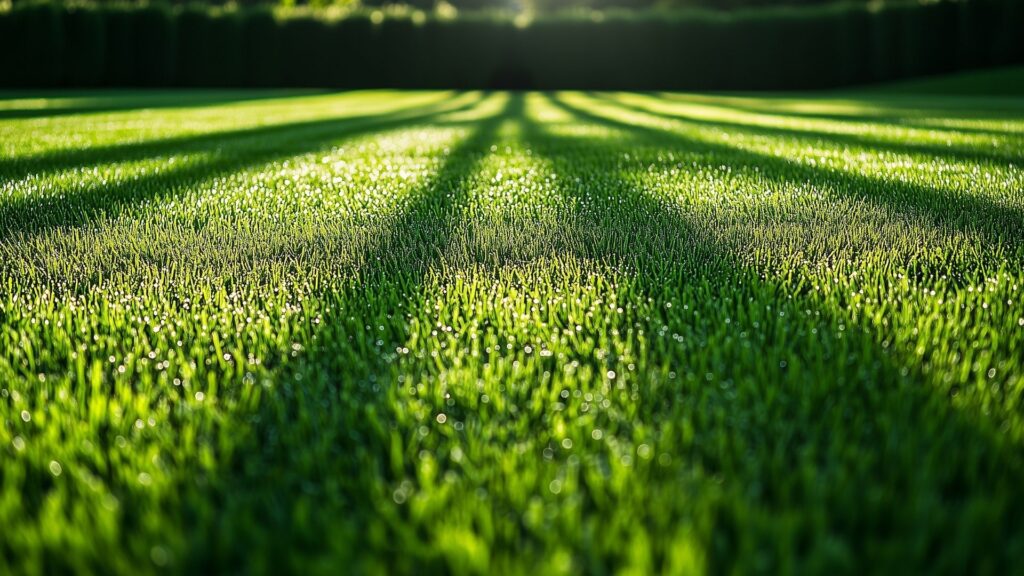
While weekly care is easily handled by homeowners, a professional “Deep Clean” is recommended annually or bi-annually.
Professional services utilize specialized machinery for power grooming (lifting flattened fibers more effectively than a broom) and high-pressure extraction to clear blocked drainage perforations that a standard garden hose cannot reach.
By following this frequency-based maintenance schedule, you can extend the lifespan of your synthetic turf from the standard 10 years to over 20 years, ensuring a safe, hygienic, and pristine environment for your family and pets.
FAQs
1. Can I use a vacuum cleaner on my astroturf?
Generally, you should not use a domestic vacuum cleaner on artificial grass with infill, as it will suck up the sand or rubber granules essential for fiber support and drainage. However, for non-infill installations on small balconies or terraces, a vacuum can be used effectively to remove fine dust and debris. For standard residential lawns, a specialized garden vacuum or a mechanical “TurfSpin” machine is the safer alternative for deep cleaning without displacing infill.
2. What is the most effective way to eliminate pet urine odors?
The most effective way to eliminate pet odors is to apply a turf-safe enzyme cleaner, which biologically digests the uric acid crystals that cause persistent smells. While a DIY solution of 50/50 white vinegar and water is a helpful mild disinfectant for light odors, it only masks the scent rather than breaking down the chemical source of the odor like enzymes do. For heavy-use pet areas, rinsing daily and using an antimicrobial infill like Zeolite can provide long-term odor control.
3. Is it safe to clean astroturf with a pressure washer?
A pressure washer is safe only when used on a low-pressure setting (below 1500 PSI) with a wide fan nozzle held at least 12 inches (30cm) away from the surface. You must avoid direct, high-pressure streams on seams or edges, as this can lift the turf, tear the backing, or blast out the infill. For most routine cleaning, a standard garden hose with a spray nozzle provides sufficient pressure to remove dust and dirt without risking structural damage.
4. How do I remove sticky stains like chewing gum or tree sap?
To remove sticky substances, apply ice cubes or an aerosol refrigerant to the area until the material hardens and becomes brittle. Once frozen, use a plastic putty knife or a blunt spatula to gently scrape the substance away, ensuring you move in the direction of the grass blades to prevent tearing the fibers. For any remaining residue, a small amount of mineral spirits applied to a cloth can be used to dab the spot, followed by a thorough water rinse.
5. Why does my artificial lawn smell like "wet dog" after it rains?
A “wet dog” or strong ammonia smell after rain usually indicates “infill compaction” or a drainage blockage that has trapped organic waste and urine salts in the base layer. When rainwater saturates these blocked drainage holes, it reactivates the accumulated bacteria and ammonia compounds. This is a sign that the turf requires a professional deep clean or infill replenishment to restore the vertical airflow and drainage performance of the system.
© How To Clean Wiki | 2026 Created with ❤️