Steam cleaning sounds like the perfect way to clean hardwood floors. It is hot, powerful and does not always need harsh chemicals. But when it comes to real wood flooring, steam is not as safe as it looks.
The short answer is you usually should not steam clean hardwood floors. Hardwood is sensitive to heat and moisture, and steam can work its way into seams, scratches and gaps between boards. Over time, that can lead to swelling, cupping, warping, cloudy finish marks or permanent floor damage.
There are a few rare situations where a steam mop may be used on hardwood, but only if the floor is fully sealed, in good condition and the manufacturer says steam cleaning is safe. Even then, it should be done carefully, on the lowest steam setting, and never as a regular cleaning method.
Quick Answer: Can You Steam Clean Hardwood Floors?
You can steam clean some sealed hardwood floors, but it is usually not recommended. Steam cleaners force hot moisture onto the surface, and hardwood floors are not designed to handle repeated heat and dampness. Even sealed wood can have tiny gaps, worn finish, scratches or joints where steam can get underneath the surface.
For most homes, the safer option is to clean hardwood floors with a vacuum, soft broom or microfiber mop and a small amount of wood-safe cleaner. This gives you a clean floor without pushing moisture into the boards.
If your floor is old, unsealed, waxed, oiled, scratched, gapped or engineered with unknown care instructions, do not steam clean it.
Why Steam Cleaning Can Damage Hardwood Floors
Hardwood floors are made from natural wood. Wood expands when it absorbs moisture and contracts when it dries. That movement is normal, but steam cleaning can speed it up and push moisture into places where it should not go.
A steam mop does not just wipe the surface. It uses heat and vapour to loosen dirt. On tile or vinyl, that can be useful. On hardwood, the same steam can soften finishes, enter seams and cause moisture to sit below the surface.
The main risks include:
- Warping: boards can bend or lift when they absorb too much moisture.
- Cupping: the edges of boards rise higher than the centre.
- Cloudy finish: heat and moisture can leave dull, white or hazy patches.
- Splitting or cracking: repeated moisture changes can stress the wood.
- Loose boards: steam can affect adhesives or weaken areas around joints.
- Warranty problems: many flooring manufacturers do not cover steam mop damage.
This is why the advice around steam cleaning hardwood can feel confusing. Some people use steam mops for years with no obvious issue. Others see damage after one or two uses. The difference usually comes down to the floor’s finish, age, installation quality, moisture level, gaps and the type of steam mop used.
Sealed Hardwood Does Not Mean Waterproof Hardwood
A lot of steam mop advice says steam is safe on “sealed hardwood”. That is only partly true.
A sealed hardwood floor has a protective finish on the surface. This finish helps resist everyday spills, dirt and light damp mopping. But it does not make the floor waterproof. Water can still get through worn patches, scratches, seams, board edges and tiny cracks in the coating.
This matters because steam is finer than normal water droplets. It can move into small gaps more easily, especially if the mop is held in one place or used too often.
So, while sealed hardwood is safer than unsealed hardwood, it is still not risk-free.
When You Should Never Steam Clean Hardwood Floors
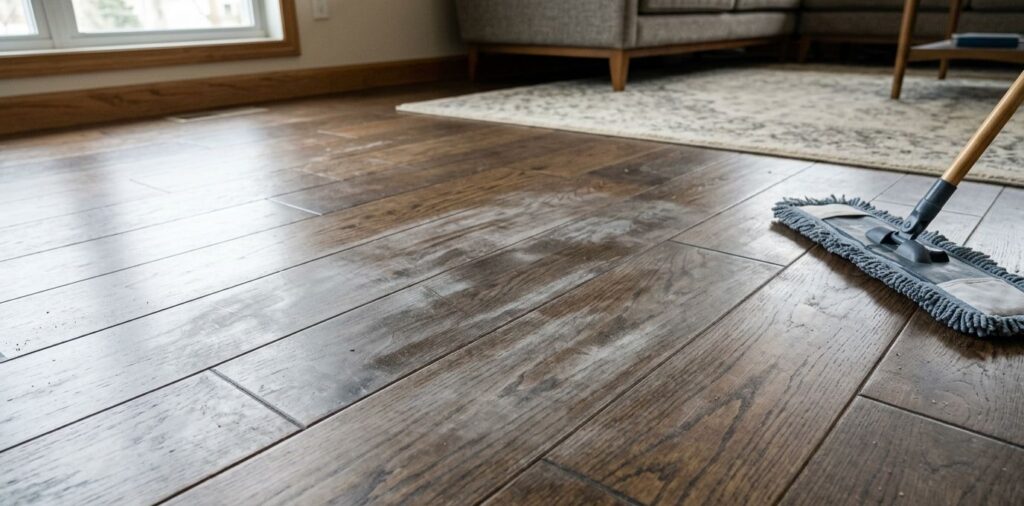
There are some situations where steam cleaning hardwood floors is a clear no.
Do not use a steam mop if your floor is unsealed, waxed, oiled, damaged, old or already showing signs of movement. Steam can make existing problems worse and may cause damage that cannot be fixed with simple cleaning.
You should avoid steam cleaning if:
- the floor absorbs water instead of repelling it
- the boards have gaps, cracks or scratches
- the floor has a wax or oil finish
- the finish looks dull, thin, patchy or worn
- the boards are cupping, lifting or separating
- the floor is very old or has been refinished many times
- the manufacturer warns against steam cleaning you are unsure whether the floor is solid hardwood, engineered hardwood or laminate.
If you are not sure what type of floor you have, treat it as steam-sensitive.
Can You Steam Clean Engineered Hardwood Floors?
You should be even more careful with engineered hardwood. Engineered hardwood has a real wood top layer over a layered core. That structure can be stable, but it can also be vulnerable if moisture gets into the joins, veneer or core.
Steam can damage engineered hardwood by weakening adhesives, swelling the core or causing the top layer to lift. Some manufacturers may allow certain low-moisture cleaning methods, but many advise against steam mops completely.
The safest rule is simple: only steam clean engineered hardwood if the manufacturer specifically says it is allowed. If you cannot find that guidance, do not use steam.
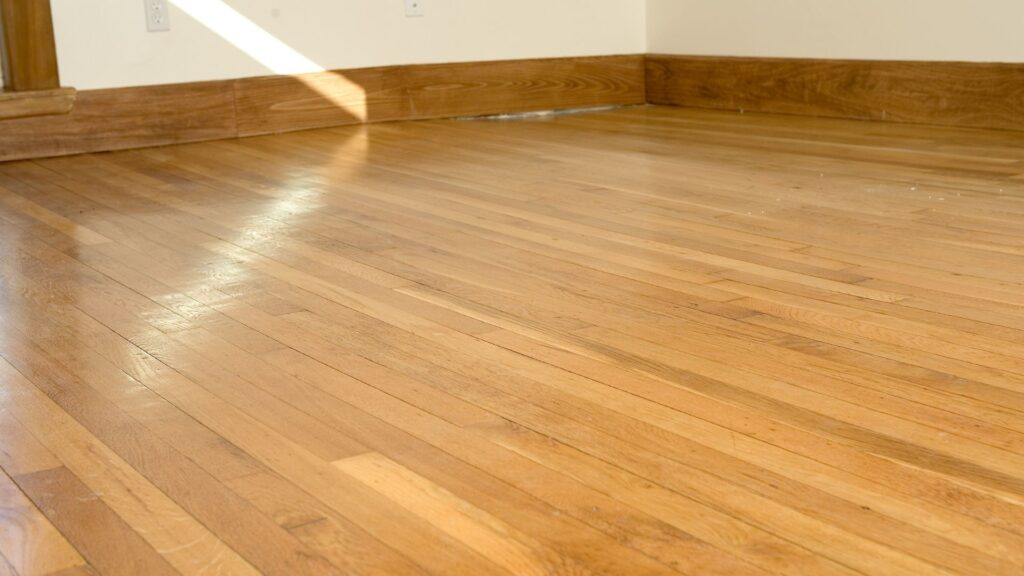
How To Check If Your Hardwood Floor Is Sealed
Before using any damp cleaning method, it helps to know whether your hardwood floor is sealed. A simple water test can give you a clue.
Choose a hidden area, such as behind a door or under furniture. Place a small drop of water on the floor and wait a few minutes.
If the water beads on the surface, the floor is likely sealed. If the water soaks in, darkens the wood or leaves a mark, the floor is likely unsealed or the finish is worn. In that case, do not steam clean it.
This test is useful, but it is not a guarantee that steam is safe. A floor can pass a water bead test in one area and still have weak spots elsewhere. High-traffic areas, doorways, kitchens and hallways often wear faster than hidden corners.
If You Still Use a Steam Mop, Follow These Rules
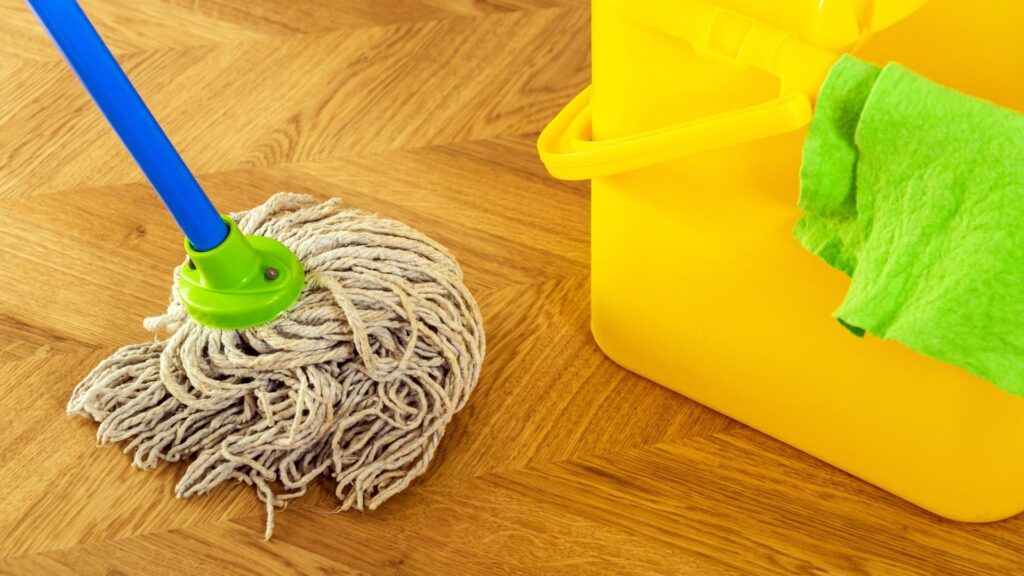
Steam cleaning hardwood is not the safest option, but if your flooring manufacturer allows it and your floor is sealed and in good condition, you need to use the steam mop carefully.
Use the lowest steam setting and make sure the mop pad is clean before you start. A dirty pad can drag grit across the finish and cause scratches. Do a small test in a hidden area first and check for clouding, dullness or raised grain after the floor dries.
When cleaning, keep the mop moving at all times. Do not hold it over one spot, do not press it into the floor and do not let it sit while hot. Work in small sections and dry the floor straight away with a clean microfiber cloth.
Steam should not leave the floor visibly wet. If you see damp patches, streaks or moisture sitting between boards, stop using the steam mop.
The safest way to reduce risk is to use steam rarely. It should not be your weekly hardwood cleaning method.
Cleaning Hardwood Floors Without Steam
The best way to clean hardwood floors is to use as little moisture as possible. Hardwood does not need to be soaked to be clean. In most homes, dust, grit and footprints can be removed with dry cleaning and a lightly damp microfiber mop.
Start by vacuuming with a hard floor attachment or sweeping with a soft broom. This removes grit that could scratch the finish when you mop. Then use a microfiber mop with a pH-neutral hardwood floor cleaner. Spray the cleaner onto the mop pad rather than directly onto the floor.
Mop with the grain of the wood and avoid over-wetting the surface. The mop should be damp, not wet. After cleaning, dry any remaining moisture with a clean towel or dry microfiber pad.
This method is safer than steam because it cleans the surface without forcing hot moisture into the boards.
Hardwood Floor Types: What Is Safe?
| Floor type | Can you steam clean it? | Best advice |
|---|---|---|
| Sealed hardwood | Sometimes, but risky | Only if manufacturer-approved and used rarely |
| Unsealed hardwood | No | Avoid steam and use dry cleaning methods |
| Waxed hardwood | No | Steam can damage or soften the wax finish |
| Oiled hardwood | No | Heat and moisture can affect the oil finish |
| Old hardwood | Usually no | Worn seams and finishes make steam risky |
| Scratched hardwood | No | Steam can enter scratches and damage the wood |
| Manufactured hardwood | Only if approved | Check manufacturer guidance first |
| Laminate flooring | Usually no | Only use steam if the laminate is steam-rated |
| Vinyl plank | Sometimes | Check the product instructions |
| Tile | Usually yes | Steam is much safer on non-wood surfaces |
FAQs
Can you steam clean hardwood floors?
You usually should not steam clean hardwood floors. Steam uses heat and moisture, which can seep into seams, scratches and gaps. This can damage the finish or cause the wood to swell, cup or warp.
Can you use a steam mop on sealed hardwood floors?
You can use a steam mop on some sealed hardwood floors, but only if the manufacturer says it is safe. A sealed floor is more protected than unsealed wood, but it is not waterproof. Steam can still enter weak spots.
What happens if you steam mop hardwood floors?
Steam mopping hardwood floors can cause cloudy finish marks, raised grain, swelling, cupping, warping or loose boards. Damage may happen quickly if the mop is left in one place, or gradually after repeated use.
How do I know if my hardwood floor is sealed?
Place a small drop of water on a hidden area of the floor. If it beads on the surface, the floor is likely sealed. If it soaks in or darkens the wood, the floor is probably unsealed or the finish is worn.
Can steam cleaning remove stains from hardwood floors?
Steam may lift surface dirt, but it is not the best way to remove stains from hardwood. If a stain has soaked into the wood or finish, steam can make the problem worse by adding heat and moisture.
What is the safest way to clean hardwood floors?
The safest way to clean hardwood floors is to vacuum or sweep first, then use a lightly damp microfiber mop with a pH-neutral wood floor cleaner. Spray the mop pad rather than the floor and dry any damp areas straight away.
© How To Clean Wiki | 2026 Created with ❤️