Manufactured hardwood flooring, technically known as engineered hardwood, has revolutionized modern home design by offering the aesthetic of solid timber with enhanced structural stability.
However, its unique multi-layered construction a genuine wood veneer bonded to a high-density fiberboard (HDF) or plywood core, requires a specialized maintenance protocol to prevent permanent damage.
To maintain these systems, homeowners must transition from “cleaning” to “surface preservation.” This guide outlines the professional-grade techniques required to protect your investment and ensure your floors remain an asset for decades.
The Science of the "Manufactured" Surface
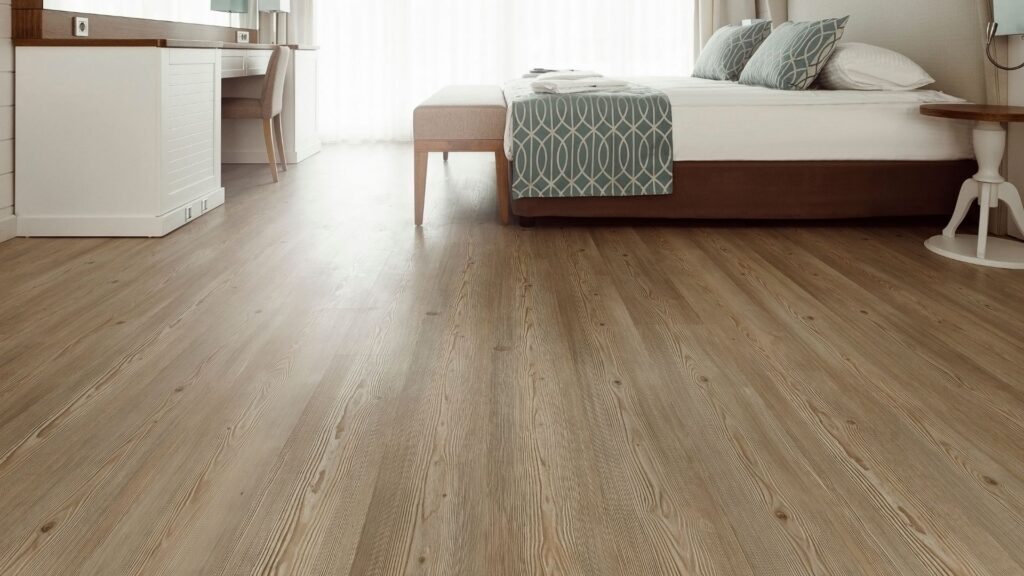
Understanding your floor’s anatomy is the first step in proper care. Manufactured floors are topped with a wear layer (veneer) that is typically finished in a factory with aluminum oxide or high-grade polyurethane. While this finish is incredibly durable, it is not invincible.
The core of the floor is hygroscopic, meaning it reacts to moisture. Excess water can seep into the seams, causing the core to swell, which leads to “cupping” (edges higher than the center) or “delamination” (the veneer peeling away from the core).
The Essential Toolkit: Professional Recommendations
Using the wrong tools is the leading cause of premature floor failure. Industry standards from the National Wood Flooring Association (NWFA) recommend the following:
| Tool | Recommended Type | Purpose |
| Vacuum | Hard-floor setting (Beater Bar OFF) | Removes grit without scratching the finish |
| Mop | Flat Microfiber Mop | Traps dust and applies minimal moisture |
| Broom | Soft-bristle synthetic or natural | Daily dust mitigation |
| Cleaner | pH-neutral, water-based solution | Cleans without stripping the protective layer |
Critical Warning: Never use a vacuum with a rotating beater bar or power brush head. These are designed for carpets and can leave rhythmic “chatter marks” or micro-scratches in your hardwood finish.
The "Less is More" Cleaning Protocol
The golden rule of manufactured hardwood is to minimize liquid exposure. Follow this tiered schedule for optimal results:
- Daily: Grit Mitigation
Grit acts like sandpaper underfoot. Sweep high-traffic areas daily using a soft-bristle broom or a microfiber dust mop. - Weekly: The Bare-Floor Vacuum
Vacuum the entire floor once or twice a week. Ensure the vacuum is set to “bare floor” to keep the wheels from dragging and the brush from spinning. - Monthly: The Damp Mop (Not Wet)
Mopping should be infrequent.- Step 1: Lightly mist a pH-neutral cleaner (like Bona or a manufacturer-recommended solution) directly onto a microfiber mop pad, never directly on the floor.
- Step 2: Mop in the direction of the wood grain.
- Step 3: Wring the mop so thoroughly that it feels almost dry to the touch before it ever hits the wood.
Common Cleaning Mistakes
Existing online guides often suggest “natural” remedies that are actually catastrophic for modern finishes.
No Steam Mops: Steam forces moisture deep into the wood layers and the core, causing immediate warping, buckling, and voiding most warranties.
No Vinegar or Ammonia: Vinegar is acidic (ph= approx 2.4 – 3.4) and ammonia is highly alkaline. Both will chemically etch the finish over time, leaving the floor looking dull and “lifeless.”
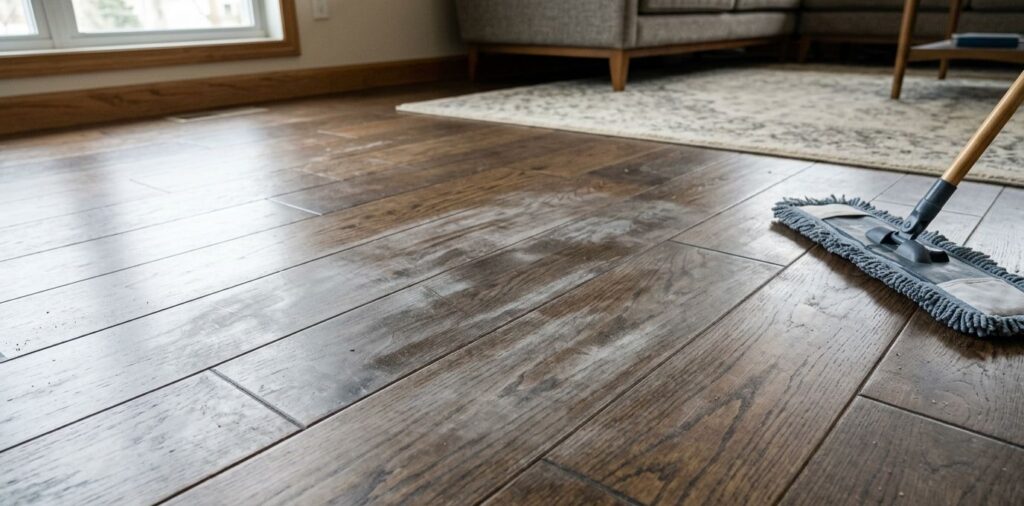
No Oil Soaps or Waxes: Products like Murphy’s Oil Soap can leave a sticky residue that traps dirt and creates a “cloudy haze” that is difficult to remove.
Troubleshooting Common Issues
Removing the “Cloudy Haze”
A common complaint among homeowners is a hazy film on the floor, often caused by product buildup. To remove this, professionals suggest:
Mix a highly diluted solution of 1/4 cup white vinegar to 1 gallon of water (use only for stripping buildup, not routine cleaning).
- Work in small 2ft x 2ft sections, wiping with a damp cloth and immediately buffing dry with a separate clean towel.
Managing Scratches and Gouges
- Surface Scuffs: These can often be hidden with a “scratch concealer” or a color-matched felt-tip marker.
- The Walnut Trick: For light scratches, rub the meat of a shelled walnut over the area. The natural oils help blend the scratch into the surrounding wood.
For deep-seated stains like pet urine or ink, soak a cotton cloth in hydrogen peroxide and place it over the spot for up to six hours. This pulls the pigment out of the wood fibers without the need for aggressive scrubbing.
Humidity Control
Temperature: Maintain between 60 degrees Fahrenheit and 80 degrees Fahrenheit.
Relative Humidity (RH): The NWFA recommends keeping your home between 30% and 50% humidity year-round. Use a hygrometer to monitor these levels and adjust with a humidifier or dehumidifier as seasons change, and maintain temperatures between 60 degrees Fahrenheit and 80 degrees Fahrenheit.
Caring for manufactured hardwood floors is an exercise in restraint. By avoiding excessive water, shunning acidic “natural” cleaners, and maintaining a consistent indoor climate, you can preserve the factory finish for its intended lifespan. When the floor eventually loses its luster, consult a professional about a “screen and recoat” rather than a full sand and refinish, as the thin veneer layer limits how many times the floor can be sanded
FAQs
Can you steam clean manufactured hardwood floors?
No, steam cleaning is not recommended for manufactured (engineered) hardwood. Steam mops use high-pressure heat and moisture that can penetrate the genuine wood veneer and reach the core layers. This process often results in the core swelling, the veneer delaminating (peeling), and the planks warping or buckling, which typically voids manufacturer warranties.
What is the best way to clean manufactured wood floors without leaving streaks?
To achieve a streak-free finish, use a pH-neutral, water-based cleaner specifically formulated for hardwood. Avoid spraying the solution directly onto the floor; instead, lightly mist it onto a microfiber mop pad. Work in small sections and immediately buff the area dry with a clean, dry microfiber cloth to prevent cleaning agents from drying into a film.
Is vinegar and water safe for cleaning engineered hardwood?
While some DIY guides suggest vinegar, industry authorities like the National Wood Flooring Association (NWFA) generally advise against its routine use. Vinegar is highly acidic (pH 2.4–3.4), and regular application can chemically etch the protective finish, leading to a dull, lifeless appearance over time.
How often should I sweep and mop manufactured hardwood floors?
Maintenance should follow a tiered schedule based on foot traffic. You should sweep or dust-mop daily to remove grit and abrasive particles that act like sandpaper on the finish. Vacuuming with a hard-surface setting (beater bar OFF) should occur 2–3 times weekly, while damp mopping with a specialized cleaner is typically only necessary once a month for deep cleaning.
Why do my manufactured hardwood floors look cloudy after cleaning?
A cloudy haze is usually the result of “surfactant buildup” from using too much cleaning product, oil-based soaps, or “mop and shine” waxes. These products leave behind a sticky residue that traps micro-dust on the surface. In some cases, cloudiness can also be caused by moisture trapped within the finish (blushing) due to high humidity or excessive water use.
What is the ideal temperature and humidity for manufactured hardwood?
Manufactured wood is hygroscopic and reacts to its environment. To prevent structural issues like gapping or cupping, you should maintain a consistent indoor relative humidity (RH) between 30% and 50%. The temperature should ideally be kept between 60 degrees Fahrenheit and 80 degrees Fahrenheit year-round.
© How To Clean Wiki | 2026 Created with ❤️